

HPC Fire
HPC Fire Forno Series Hybrid Dual Fuel Wood & Gas Burning Pizza Oven with Cart
HPC Fire Forno Series Hybrid Dual Fuel Wood & Gas Burning Pizza Oven with Cart
SKU: FDP-FORNO/BLX-EI-LP
- Regular price
- Price: $6,677.00
- Regular price
- List Price:
- Sale price
- Price: $6,677.00
- Unit price
- per
Couldn't load pickup availability
Talk to the owner, not a bot
Chat and calls go straight to the owner's personal phone. No AI, no call centers, real answers typically the same day. Call 877-281-OVEN (6836).
 PRODUCT DESCRIPTION
Description
The HPC Fire Forno is the oven on a cart from the Forno de Pizza line: a refractory dome cast in one piece with two inch walls, set on a three inch hearth in a 304 stainless frame, tiled by hand in recycled glass mosaic, and mounted on a black steel cart with locking casters. It burns wood, it burns natural gas or propane, and it burns both at once, because the gas burner is how you light the wood. Every Forno is built in Miamisburg, Ohio by Hearth Products Controls, the company behind the HPC electronic ignition systems in fire pits across the country, and the same flame sensing ignition runs this oven. Crustify is an authorized dealer, and every HPC Fire Forno ships free by freight.
If you have been comparing hybrid ovens, the Forno pizza oven is the one that lets you choose natural gas or propane at order, keeps the cart in the box, and puts a cast masonry chamber behind the flame instead of a steel shell. Below is everything a buyer needs to decide: how it is built, how the two fuels work together and what your gas supply needs, what each of the six tile colors looks like, how it cooks, how it arrives and goes together, and who should buy something else.

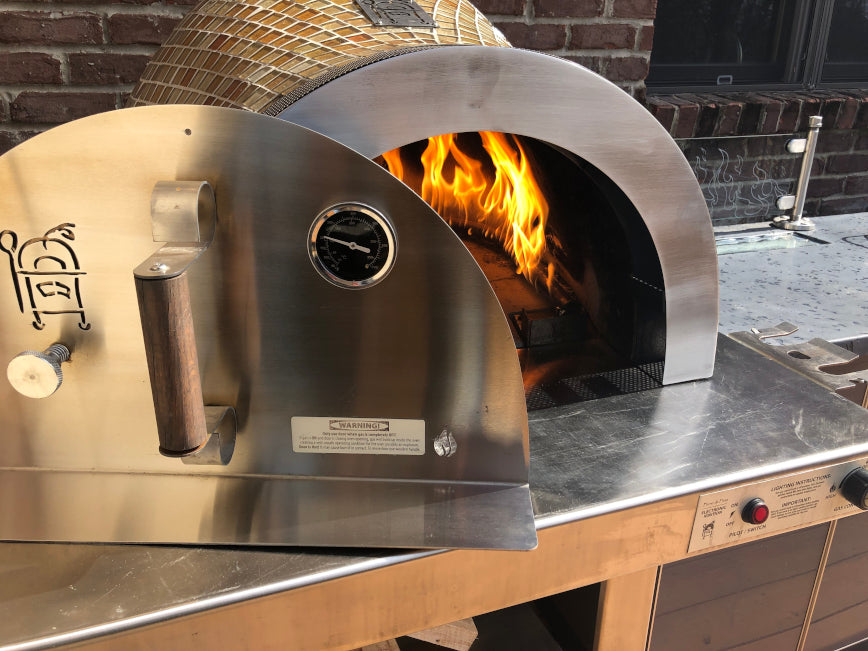
The HPC Fire Forno lit on wood, door set aside on the hearth, the stainless vent in the opening doing the job a chimney does on other ovens.
HPC Fire Forno at a glance
Cast refractory dome, one piece, two inch walls rated to 2,400°F, on a three inch hearth in a 304 stainless frame; about 445 pounds assembled on its cart
Wood plus gas: natural gas or propane, chosen in the picker above; electronic flame sensing ignition on two D cells or the 110V adaptor; the burner lights the wood and steadies it
29 by 30 inch floor, 870 square inches, 18 inch mouth; pizza temperature in about 30 minutes; two 12 inch pizzas at a time, then roasts, bread and smoking on the door
Six recycled glass mosaic finishes set by hand, no two ovens alike; stainless front vent, no chimney to run
Black powder coated steel cart, 44 inches deep and 60 inches tall with a cedar slat shelf and four locking casters; comes apart into oven, hearth and cart for a truck
In the box: tiled oven, hearth, vent and cart. Sold separately: the door with thermometer, the cover and the accessory kit
Gas only first firing of at least five hours before the first pizza; hairline cracks are normal and not a defect; two year warranty on residential use
Free freight on a 450 pound pallet from HPC's warehouse, with the $95 residential liftgate fee at checkout; usually ships within a couple of business days; 14 day returns on an unused crated oven
Questions before you order? The FAQ tab below covers the ten we hear most, and the chat button reaches the owner directly.
Why a Cast Refractory Dome Cooks Differently
Most ovens in the Forno's price range are stainless steel around a cordierite stone. Steel heats in minutes and gives its heat back in minutes; when the burner drops, the floor drops with it. The HPC Fire Forno is a different object. The chamber is poured as a single piece of refractory, the same class of material that lines kilns and foundry ladles, with walls two inches thick and a rating to 2,400°F. That mass soaks up heat during the burn and gives it back from every direction at once: conduction up through the hearth into the base of the crust, radiant heat off the dome onto the toppings, and convection as the hot air rolls off the fire, over the dome, and back down. HPC's own line is two times faster to heat, two times more fuel efficient and two times longer holding heat than a thin walled oven, and the numbers behind it are the ones that matter to a cook: the hearth runs about 800°F at full fire, the top of the dome runs past 1,000°F, and the outside of the dome stays at about a third of the inside temperature.
The one piece pour is the point. A masonry oven assembled from bricks and mortar cannot be moved once it is built, and a kit oven of stacked panels has joints that open and close with every heat cycle. The Forno pizza oven is cast whole, so it holds the shape of a century old oven and still lifts off the hearth for a move. Under it sits a three inch hearth slab in a 304 stainless frame, with a carbon fiber gasket between oven and hearth, and the burner runs along one side wall of the chamber so wood can sit on top of it. There is no chimney. A stainless vent drops into the front of the opening and pulls smoke out over the mouth of the oven, which keeps the heat inside the dome and keeps the profile low enough to tuck under a covered patio, subject to the clearances in the placement section below. The wood fired versus gas guide covers why mass changes the way an oven cooks.

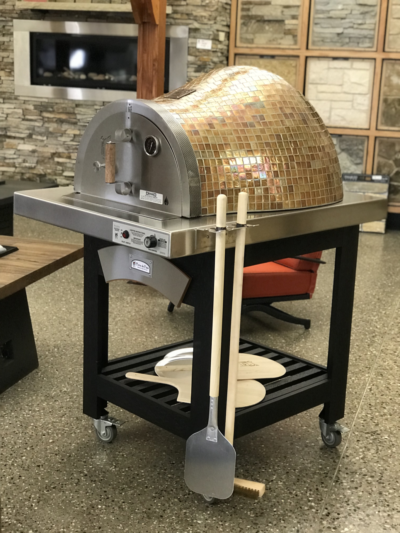
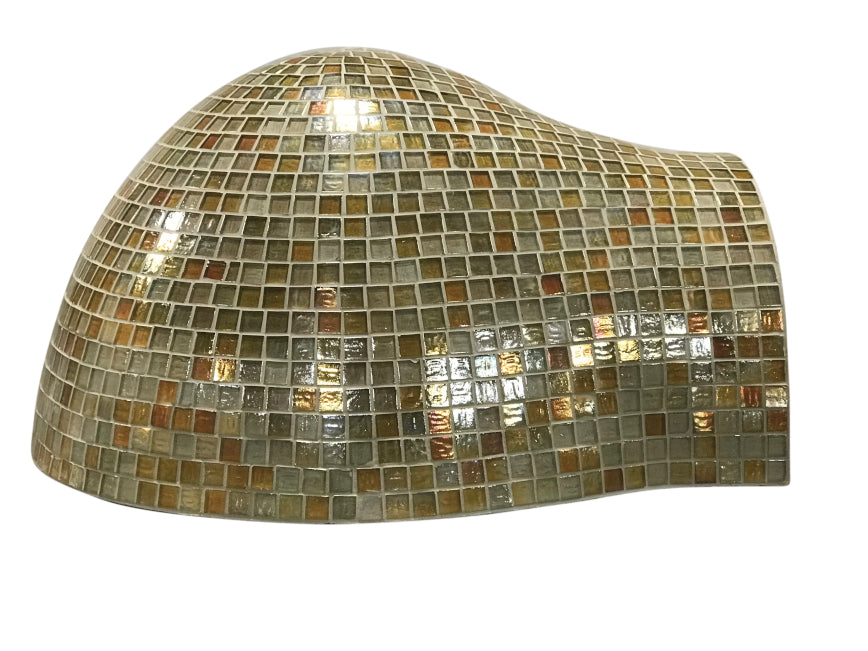
A Copper Forno on the showroom floor. The tile is glass mosaic set over the cast dome in a high temperature mortar; the hearth and vent are stainless, the cart is powder coated steel with cedar slats.
Choose Your Fuel: Natural Gas or Propane, Plus Wood
Every HPC Fire Forno burns wood. What you choose in the Gas Type picker above is the gas that runs the burner, and it is set at the factory, so decide before you order. Natural gas is the choice if there is a gas line on the patio or one can be run: no tank to refill, and a hard line that never runs dry halfway through a party. Propane is the choice for a patio with no gas line, or an oven that will move between spots. The oven itself is identical either way; the difference is the orifice and the regulator that ship with it. If you order one and your plans change, HPC can convert a Forno from one gas to the other through a licensed HVAC or gas technician, so it is not a permanent decision, only a decision that costs a service call to undo.
A natural gas Forno connects to the house supply at 6 to 7 inches of water column, which is standard residential pressure. The flex line from the shutoff to the oven has to be rated to the oven's full input and certified to ANSI Z21.75, and HPC's manual asks for a licensed gas installer on the hookup. The one thing to plan for is capacity: if a grill, a fire pit and the Forno all draw from one undersized run, the pilot will not stay lit, which is the most common natural gas call HPC gets and is a plumbing question, not an oven fault. A propane Forno ships with its regulator and a QCC1 fitting for a standard 20 or 30 pound cylinder at 11 inches of water column. A 20 pound tank runs about 12.5 hours with the burner wide open, and far longer at the setting you will use once the wood is going. Never store a spare cylinder under the cart.
The ignition is HPC's flame sensing electronic system, the one they build into fire pits. A switch on the front of the hearth lights the pilot in 30 to 60 seconds on the first start, the gas knob beside it sets the flame, and the whole thing runs on two D cell batteries that last six months to a year, or on the supplied 110V adaptor plugged into a GFCI outlet within 12 to 18 inches of the hearth on the left side. There is no match, no lighter, no fumbling with a torch on a windy night, and the burner will not run without a proven pilot.
Here is how the two fuels work together in practice, because it is the reason to own a hybrid rather than a wood oven and a gas oven. You light the pilot, set the flame, and lay dried oak on top of the burner. The gas lights the wood. Once the wood has caught and the first coals have formed, you push the fire to the center to heat the hearth, then to the back, and add more wood on the coals. You leave the gas on. It keeps the flame steady, it burns off the smoke a dying fire makes, and it means the temperature never drops while you are between logs. On a weeknight you can skip the wood entirely and cook on gas alone in a chamber that still has the mass of a masonry oven behind it. The dual fuel pizza oven guide puts the Forno against the other hybrids on the site.
Choose Your Tile Color
The dome is finished in glass mosaic, 100 percent recycled glass made in the USA, set by hand in a proprietary high temperature mortar that keeps its bond through the heat cycling a pizza oven puts it through. Six standard colors are in the Choose Color picker above, each with its own HPC model number, and every one is the same oven underneath: same dome, same hearth, same cart, same cure, same warranty. Because every dome is tiled by hand, no two are exactly alike, and the color you receive will read a little differently in sun and in shade than any photo. Custom colors through American Glass Mosaics are available on request for a buyer matching a specific kitchen; contact us before ordering and we will quote it.

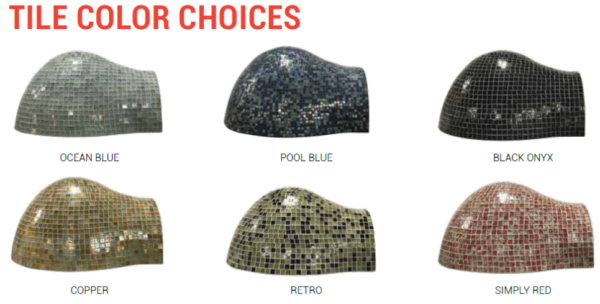
The six standard finishes. The same cast dome sits under every one of them.
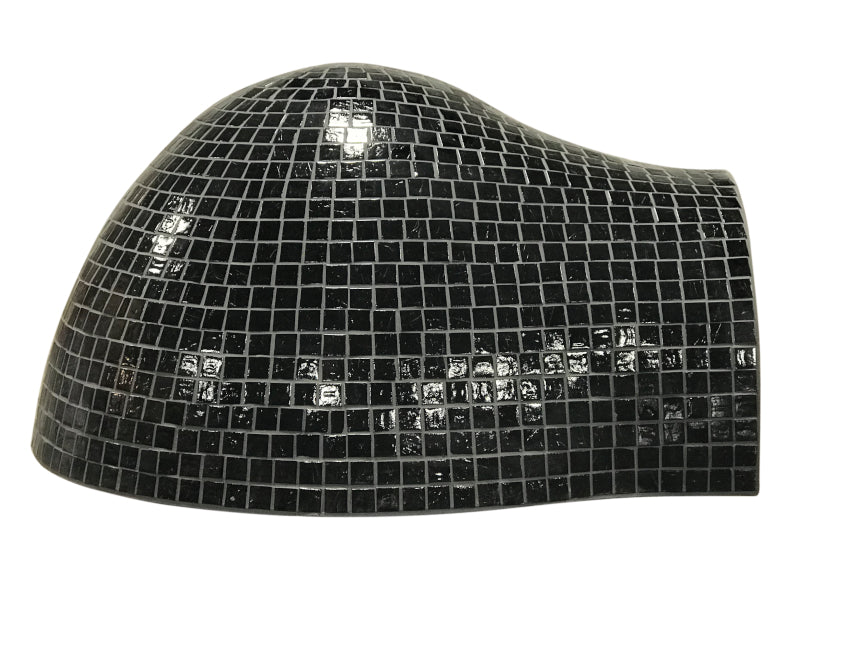
Black Onyx: FDP-FORNO/BLX-EI

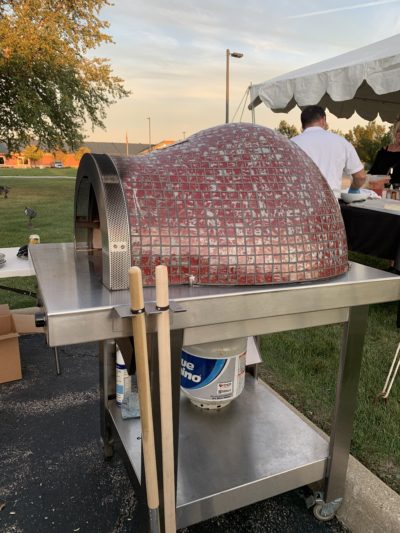
Solid black glass across the whole dome. It reads as one dark shape from across the yard and turns into a grid of small reflections up close and in low sun. Black Onyx is the finish for a modern kitchen in black and stainless, and it is the one that hides soot on the front edge best.
Copper: FDP-FORNO/COPPER-EI

A mix of amber, gold, bronze and pale gray glass with a metallic sheen, so the dome warms up as the light drops. Copper is the finish that photographs best beside stone and wood, and it is the one HPC puts on its own showroom floor.
Ocean Blue: FDP-FORNO/OB-EI

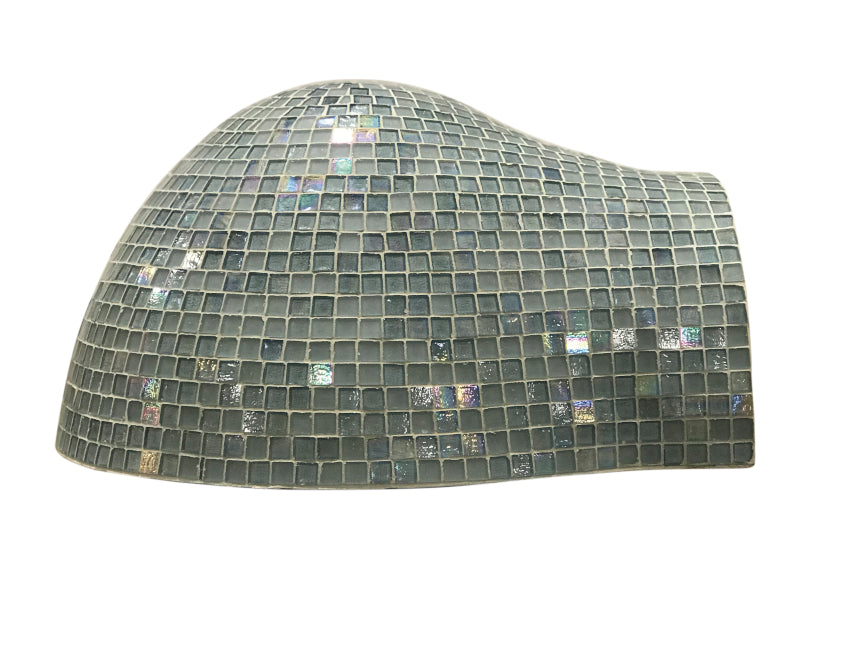
Sea green and teal glass with iridescent squares scattered through it that flash in direct light. Ocean Blue is lighter and greener than the name suggests, closer to shallow water than deep, and it suits a pool deck or a coastal patio.
Pool Blue: FDP-FORNO/PB-EI

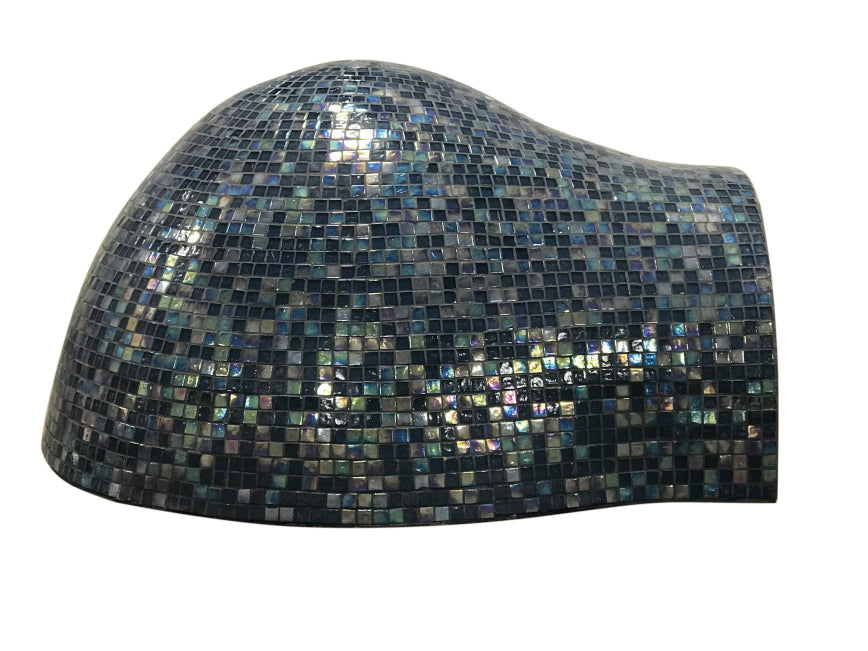
Deep navy and cobalt glass shot through with iridescent tiles that throw green, purple and gold. Pool Blue is the darker and more dramatic of the two blues and the one you see in most of HPC's own photography. It is the statement finish of the range.
Retro: FDP-FORNO/RETRO-EI

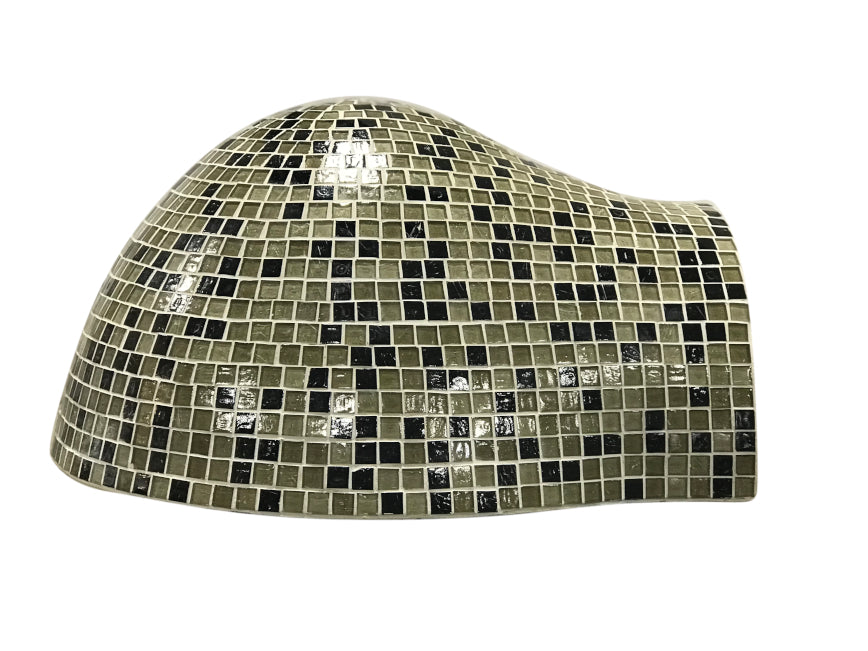
Olive and sage green glass with black tiles scattered at random through the field. Retro is the earth tone finish, the one that sits quietly against a brick wall or a wooded lot without competing with it.
Simply Red: FDP-FORNO/SR-EI

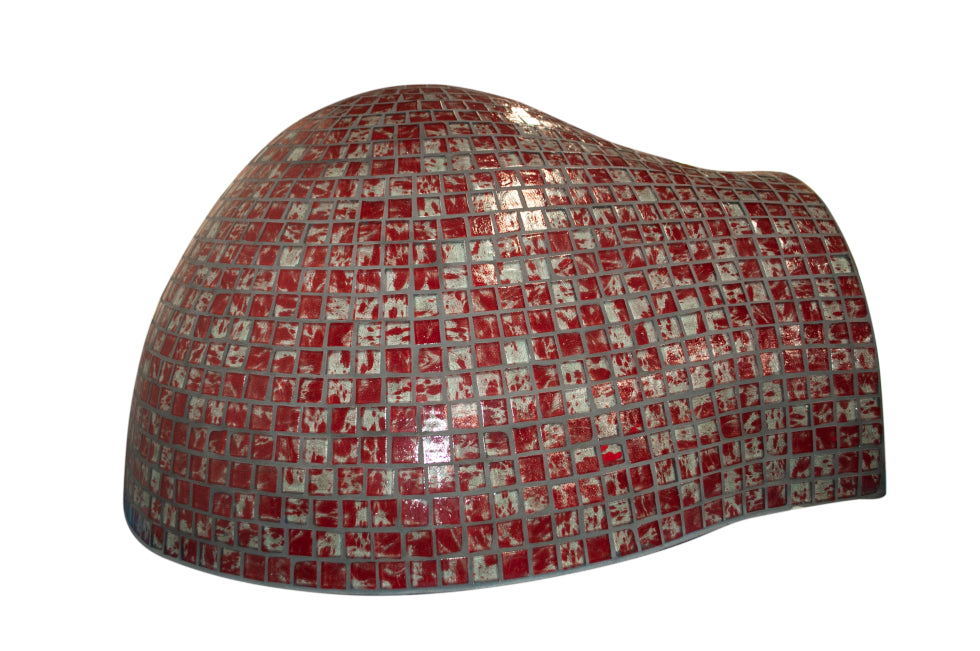
Deep red glass with silvered and white highlights in every tile, so the dome reads red from a distance and mottled up close. Simply Red is the finish that reads as a pizzeria oven from across the yard, and the one that stands out against a green lawn.
Forno, Villa or Di Napoli: Which HPC Oven Is Yours
HPC builds this dome three ways, and the Forno is the one on a cart. The Villa is the same tiled oven and hearth with a stainless flange instead of a cart, dropped into a 35 inch deep counter over a 34 inch cabinet notch in a three step install. The Di Napoli is the oven and hearth inside a ready to finish steel enclosure with a refractory arch and a six inch chimney stack, for a mason to clad into a permanent structure. Same chamber, same burner, same ignition, same fuel choice on all three. Pick the Forno if the oven needs to live on a patio without a masonry build, move for the season, or go to an event. Pick the Villa if there is an outdoor kitchen counter waiting for it. Pick the Di Napoli if the plan is a stone chimney breast.
| HPC oven | How it sits | What you build | Best for |
|---|---|---|---|
| Forno (this page) | Oven, hearth and vent on a 44 inch black steel cart, four locking casters | Nothing; two or three people assemble it on delivery day | A patio without an outdoor kitchen, an oven that moves |
| Villa | Oven, hearth and vent on a stainless flange in a counter cutout | A 35 inch deep counter with a 34 inch notch over a 36 inch cabinet | An outdoor kitchen with a counter ready for it |
| Di Napoli | Oven and hearth inside a steel enclosure with an arch and a chimney | A base, the cladding and a flue run, by a mason | A permanent stone or stucco oven that looks masonry built |
Forno (this page)
How it sits: Oven, hearth and vent on a 44 inch black steel cart, four locking casters
What you build: Nothing; two or three people assemble it on delivery day
Best for: A patio without an outdoor kitchen, an oven that moves
Villa
How it sits: Oven, hearth and vent on a stainless flange in a counter cutout
What you build: A 35 inch deep counter with a 34 inch notch over a 36 inch cabinet
Best for: An outdoor kitchen with a counter ready for it
Di Napoli
How it sits: Oven and hearth inside a steel enclosure with an arch and a chimney
What you build: A base, the cladding and a flue run, by a mason
Best for: A permanent stone or stucco oven that looks masonry built
Cooking in the Forno
The HPC Fire Forno reaches pizza temperature in about 30 minutes from a cold start on wood and gas together, longer in cold weather and on the first few fires while the mass is still learning to hold heat. Pizza wants the hearth at 625 to 650°F, and the test HPC recommends is older than any thermometer: throw a pinch of flour on the floor and it should scorch within a second or two. If it does not, bring the wood back to center, feed it, and give the hearth ten more minutes. Then brush the center clean, launch, and turn the pizza a quarter turn every 30 seconds. At full heat a Neapolitan pizza is done in about 90 seconds; a thicker crust takes a little longer at a lower fire. Two 12 inch pizzas fit side by side on the 29 by 30 inch floor with room to work a peel around them.

The chamber is not one temperature, and learning where the heat lives is the whole skill. The hearth peaks around 800°F and the top of the dome runs past 1,000°F, which is why a pizza that will not brown on top goes up on the aluminum peel toward the dome for its last seconds. The front of the floor near the mouth sits at 300 to 400°F, and that is where bread bakes and where a tray of vegetables finishes without scorching. With the optional grill rack over the coals, steaks and chops sear on the hearth; with a cast iron pan, anything you would cook on a stovetop cooks faster here. The infrared thermometer reads the floor directly, which the door dial cannot, and HPC recommends one for bread and poultry.
The door is what turns the Forno from a pizza oven into an oven and a smoker. With the vent in place and the gas at a low setting, the door goes on and the chamber bakes like a kitchen oven at whatever temperature you set. For smoking, the sequence is the reverse of everything else: finish cooking, let the fire die down, turn the gas off at the knob and at the tank or shutoff, add wood chips to the dying coals, and close the door. The smoke stays in the chamber and circulates for hours at the low temperatures smoking wants. HPC's warning is worth repeating in plain words: the door never goes on while gas is flowing unless the vent is in the opening, because a sealed chamber with gas running can build up and ignite. The door works as a damper too. Less air in, less fire, which is how you hold a roast at 350°F for an afternoon. Wood is oak, only oak: a year dried, bark off, an inch and a half to three inches through, cut 12 to 14 inches long. That is the wood HPC designed the burner around, and it gives clean heat with no popping embers on the food. The wood guide covers what to ask a supplier for. Cleaning is nothing: the chamber burns itself clean, and the ash gets shoveled out cold once a season.
The Cart, Placement and Assembly

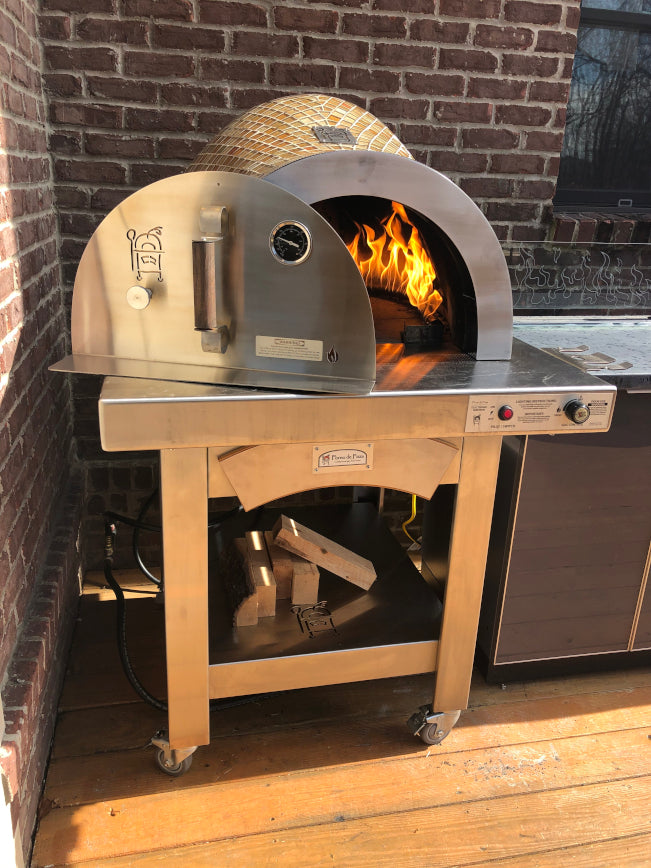
The Forno on a deck: the cart, the cedar slat shelf with the oak on it, and the gas line to the hearth. Per HPC, a deck above ground level needs a word with the building department first.
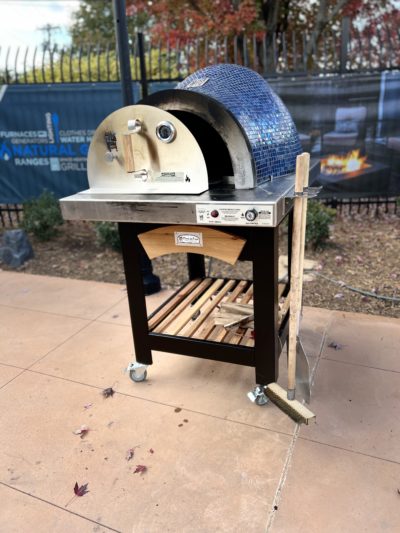
The cart is powder coated black steel with cedar slats on the lower shelf and a cedar panel across the front, on four swivel casters that lock. It is 44 inches deep front to back, the hearth top sits at about 36 inches, and the oven stands 60 inches at the crown of the dome, all per HPC's drawings and approximate. The dome itself is about 30 inches across the front and 35 inches long, with an 18 inch mouth and 19 3/8 inches of height above the hearth. Assembled on the cart it weighs about 445 pounds, which HPC describes as the weight of two grown adults standing in one spot. A concrete patio or pavers carry that without a thought; a raised deck should be checked with the local building official before the oven goes up on it. The placement guide walks through the site decision for any oven.
Clearances come from the HPC manual and they are not generous, so measure before you order. The oven needs 24 inches of clear space on every side to any combustible construction, and 36 inches from the top of the opening to any overhang, soffit or roof attached to a building. That rules out the tight corner of a covered porch and it means the vent, not a chimney, is what makes a pergola possible at all. The oven is outdoor only, never in a garage or under a closed roof, and it is never moved while hot. If the oven runs on propane, the cylinder sits on the cart's lower shelf or beside it and never a spare one under it; if it runs on natural gas, the shutoff and the flex line get planned with the installer so the line stays clear of the wheels and the hot side of the hearth.
The Forno arrives on a pallet in three cartons: the cart, the hearth, and the oven. Assembly is a two to three person job that HPC has on video and in the manual, and it goes like this: lock the cart, lift the hearth onto it with four people if you have them, fasten the three thumb screws underneath, peel the plastic, then three people carry the dome to the hearth, set the back edge down first on the carbon fiber gasket, lower the front, and fasten the four safety screws. The vent drops into the opening, the regulator or gas line connects under the hearth, and the pilot lights. It comes apart the same way, which is how a 445 pound refractory oven gets to a tailgate or a lake house in the back of a truck. HPC asks that a licensed hearth installer do the gas connection and the first light, and that an NFI certified technician service the oven annually.
Curing, Cracks and Cold Weather
Every cast refractory oven leaves the mold with water in it, and the first firing drives that water out. Rush it and the water leaves as steam and takes tile with it. The Forno's first firing is on gas only, no wood and no door, and it runs at least five hours: two hours on a half inch flame, one hour at an inch and a half, one hour at two and a half, then an hour with kindling on the burner to push the temperature the rest of the way. HPC prints the schedule on a card that comes with the oven and has a video for it, and the curing instructions are linked in the manual tab below. Do it once, on delivery day if you like, and the oven is ready for pizza the next time you light it. In freezing weather, every fire starts on gas for a while before wood goes in, so the mass warms evenly.
The Forno will crack, and this is the honest part. HPC pours control joints into the dome on purpose so that expansion has somewhere to go, and hairline cracks in the refractory open and close with every heat cycle. HPC's warranty says so in writing: cracks under an eighth of an inch are expected, do not affect cooking, and are not a defect. A crack that grows past an eighth of an inch is the point to contact HPC for repair instructions, and cracks from a skipped cure, from lighter fluid or from running the oven too fast are on the owner. The tile itself is protected by the cure, and the cover keeps rain out of the chamber between uses; put the cover on only after the oven is cold.
Who Should Buy the HPC Fire Forno, and Who Should Not
Buy the Forno if you want a cast masonry chamber without a masonry project: an oven that arrives on a pallet, stands on a cart, and cooks like the brick oven in a pizzeria. Buy it if the patio has a natural gas line and you want an oven that uses it, because most hybrid ovens with a cart are propane only. Buy it if you want one appliance that does pizza, roasting, bread and smoking, and if you like the idea that the same oven can go to a cookout in the back of a truck. And buy it in the tile color that matches the kitchen, because that choice is free and permanent.
Skip the Forno if the oven is going into a counter; the Villa is the same oven built for that, and the rest of the built-in pizza ovens collection sits beside it. Skip it if propane is fine, you already own a cart or a table, and the budget is tighter; the ItaliaForno Grande Pro Duo is a stainless hybrid at a lower price with the cart sold separately. Skip it if you want wood only and hours of stored heat for bread the next morning; the Authentic Pizza Ovens Lisboa is 1,300 pounds of firebrick on a block base and holds heat in a way a 445 pound oven cannot. Skip any refractory oven if hairline cracks will bother you. And skip this page if you have not measured the 24 inch and 36 inch clearances, because they decide where the Forno can live before anything else does. The hybrid pizza ovens and freestanding cart ovens collections hold the alternatives.
What to Order With It
The Forno de Pizza door with thermometer, FDP-DOOR, comes first. The oven is a pizza oven without it and an oven, a bread oven and a smoker with it; it is also what keeps rain, leaves and animals out of the chamber between uses, and the dial in the door reads the chamber for baking. It fits the Forno, the Villa and the Di Napoli. Second is the Forno cover, FDP-COVER-FORNO, cut for this oven on this cart; wet refractory turns to steam on the next fire, and a generic grill cover will not clear the dome. Add both to the same order and they ship on the oven's pallet at no extra charge, which is the cheapest they will ever ship.
Third is the FDP accessory kit, HPC's starting set: a utensil holder that mounts on the hearth, the oven brush, an aluminum pan peel, a wooden paddle, pizza plates and dough rolling sheets, everything in the showroom photos hanging off the cart. The FDP infrared thermometer gun reads the hearth surface, which is the number that decides when to launch. Firewood, peels and everything else are in the pizza oven accessories collection, and the HPC grill rack can be ordered through us on request.
Buying the HPC Fire Forno From Crustify

A Pool Blue Forno set up outdoors, tools on the utensil holder, oak on the shelf. This is what an order looks like a week after the pallet lands.
Every HPC Fire Forno ships on a pallet of about 450 pounds, three cartons strapped and wrapped, by freight to the curb from HPC's warehouse, and HPC usually has it out the door within a couple of business days of the order. Orders over $750 ship free, so every color and fuel qualifies; the one charge at checkout is the $95 liftgate fee every oven over 150 pounds carries, for the gate that lowers the pallet at a home address. Business address with a dock or forklift? Contact us and we refund it. We do not ship to Alaska, Hawaii or Puerto Rico, and a remote address may carry a carrier surcharge that we confirm with you before the oven ships.
Inspect the cartons before signing and note any damage on the receipt; a clean signature leaves almost no claim protection, and concealed damage must be reported within five days. Returns are accepted within fourteen days on an unused oven in its original packaging with return freight paid by the buyer. Because the fuel type is set at the factory, confirm natural gas or propane against your patio before checkout; we will help you sort it if you are not sure which you have.
The two year warranty applies to this Forno as an authorized dealer purchase, on the terms in the warranty tab: residential use, installed and cured to HPC's instructions, original purchaser. What separates dealers on this oven is delivery included and who answers the phone. At Crustify that is the owner, through the contact page or chat, usually the same day. Financing is available at checkout, and the full line sits on the HPC Fire pizza ovens brand page. Still comparing? The pizza oven buying guide covers fuel, construction and budget in five decisions, and the natural gas pizza oven guide is the read if the gas line is what brought you here.
Order the door and the cover alongside the oven and they ride free on the same delivery. The HPC Fire Forno clears the $750 free shipping threshold by itself.
KEY FEATURES
- HPC Fire Forno: the on a cart oven of the Forno de Pizza line, built in Miamisburg, Ohio by Hearth Products Controls
- Refractory dome cast in one piece, two inch walls rated to 2,400°F; the outside of the dome stays at about a third of the inside temperature
- Three inch hearth in a 304 stainless steel frame with a carbon fiber gasket under the dome
- Wood, natural gas or propane, or wood and gas together; gas type set at order and convertible later by a licensed technician
- HPC flame sensing electronic ignition on two D cells (six to twelve months) or the supplied 110V to 3V adaptor; the burner will not run without a proven pilot
- 29 by 30 inch floor, 870 square inches, 18 inch mouth, 19 3/8 inches of dome height; two 12 inch pizzas at a time
- Pizza temperature in about 30 minutes; hearth about 800°F at full fire, dome top over 1,000°F, past 1,200°F on both fuels; 90 second Neapolitan pizza
- Stainless front vent in place of a chimney; keeps heat in the dome and the profile low
- Pizza oven, bake oven and smoker with the optional door; grill rack compatible
- Six recycled glass mosaic finishes made in the USA, set by hand in a high temperature mortar, no two ovens alike; custom colors by request through American Glass Mosaics
- Powder coated black steel cart, 44 inches deep, 60 inches overall, cedar slat shelf and front panel, four locking swivel casters
- About 445 pounds assembled; ships as oven, hearth and cart on one pallet and comes apart the same way for transport
- Included: glass tiled refractory oven, stainless hearth, stainless vent, cart, ignition system with regulator and hose on propane models
- Sold separately: door with thermometer (FDP-DOOR), Forno cover (FDP-COVER-FORNO), accessory kit (FDP-ACCESSORY-KIT), infrared thermometer (FDP-INFRARED GUN), grill rack
- Gas only first firing of at least five hours; control joints and hairline cracks under 1/8 inch are normal and not a defect
- Two year warranty on materials and workmanship, residential use, original purchaser
- Free freight shipping over $750 on a 450 pound pallet, with a $95 residential liftgate fee at checkout
SPECIFICATIONS
By tile color. Every finish is the same oven; the model number suffix records the color and, on the full SKU, the gas type (LP or NG).
| Tile color | HPC model number |
|---|---|
| Black Onyx | FDP-FORNO/BLX-EI |
| Copper | FDP-FORNO/COPPER-EI |
| Ocean Blue | FDP-FORNO/OB-EI |
| Pool Blue | FDP-FORNO/PB-EI |
| Retro | FDP-FORNO/RETRO-EI |
| Simply Red | FDP-FORNO/SR-EI |
| Custom color | FDP-FORNO/CUSTOM-EI, by request through American Glass Mosaics; contact us for a quote and lead time |
Shared by every HPC Fire Forno. Dimensions are from HPC's drawings and are approximate; every dome is hand finished.
| Brand and origin | HPC Fire Inspired (Hearth Products Controls), Forno de Pizza line; made in Miamisburg, Ohio, USA |
|---|---|
| Oven type | Hybrid wood and gas refractory dome oven on a cart, freestanding |
| Fuel | Wood plus natural gas or propane (selected at order; convertible later by a licensed technician); wood and gas can run together |
| Gas supply | Natural gas 6.0 to 7.0 in W.C. on fixed piping; propane 11 in W.C. through the supplied regulator with QCC1 fitting on a 20 or 30 lb cylinder; flex line rated to the oven's input and certified to ANSI Z21.75 / CSA 6.27 |
| Ignition | Electronic flame sensing pilot, 3V; two D cell batteries (6 to 12 months) or 110V to 3V adaptor into a GFCI outlet within 12 to 18 in of the hearth on the left side |
| Dome construction | Refractory cast in one piece, 2 in wall thickness, rated to 2,400°F; control joints cast in |
| Hearth | 3 in refractory hearth in a 304 stainless steel frame; carbon fiber gasket between oven and hearth |
| Cooking floor | 29 W x 30 D in, 870 sq in |
| Opening | 18 in wide; stainless front vent installed in the opening; optional stainless door with thermometer |
| Dome exterior | Approx. 30 in wide x 35 in long x 19 3/8 in tall above the hearth |
| Overall | Approx. 44 in deep x 60 in tall on the cart; hearth top approx. 36 in from the ground |
| Weight | Approx. 445 lb assembled on the cart; approx. 450 lb shipping weight on one pallet in three cartons |
| Temperatures | Pizza hearth 625 to 650°F; hearth peaks about 800°F; dome top over 1,000°F; over 1,200°F possible on wood and gas together; bread zone at the front 300 to 400°F |
| Heat up | About 30 minutes to pizza temperature on wood and gas; longer in cold weather |
| Capacity | Two 12 in pizzas at a time |
| Cooking modes | Pizza, bake (door on, vent in), grill (optional rack), smoke (door on, gas off) |
| Exterior finish | Hand set recycled glass mosaic tile, made in the USA, in high temperature mortar; six standard colors, custom by request |
| Cart | Powder coated black steel, cedar slat lower shelf and cedar front panel, four locking swivel casters; three thumb screws to the hearth |
| Clearances | 24 in from all sides of the oven to combustible construction; 36 in from the top of the opening to any overhang, soffit or attached roof (HPC manual) |
| Placement | Outdoor use only; never moved while hot; raised decks to be checked with the local building official; no spare LP cylinder stored under or near the oven |
| Assembly | Two to three people (four to lift the hearth); licensed hearth installer recommended for the gas connection; disassembles for transport |
| First firing | Gas only, no door, at least 5 hours: 2 h at a 1/2 in flame, 1 h at 1 1/2 in, 1 h at 2 1/2 in, 1 h with kindling on the burner |
| Wood | Oak only: at least one year dried, debarked, 1 1/2 to 3 in diameter, 12 to 14 in long |
| Included | Glass tiled refractory oven, stainless hearth, stainless vent, cart, ignition system; regulator and hose on propane models; curing card and manual |
| Sold separately | Door with thermometer (FDP-DOOR), Forno cover (FDP-COVER-FORNO), accessory kit (FDP-ACCESSORY-KIT), infrared thermometer (FDP-INFRARED GUN), grill rack (FDP-GRILL RACK) |
| Ships from | HPC warehouse, by freight on a pallet, curbside; $95 residential liftgate fee at checkout; usually ships within a couple of business days |
| Warranty | 2 years, materials and workmanship, residential use, original purchaser; cracks under 1/8 in are normal and not covered; see Warranty Information |
| Service | Annual service by an NFI certified gas specialist recommended by HPC |
VIDEO
HPC Fire Inspired on the Forno de Pizza ovens, and the oven cooking.
The Forno de Pizza line from HPC Fire Inspired.
Wood and gas together in the HPC hybrid oven.
INSTALLATION GUIDE & USER MANUAL
HPC supplies its installation and operation manual, the curing card and the assembly video with the oven. The quick reference below is the same information, so you can plan the site, the gas supply and the first firing before the pallet arrives.
Site. Outdoors only, on a surface that carries about 445 pounds on four casters. Keep 24 inches clear on every side of the oven to any combustible construction and 36 inches from the top of the opening to any overhang, soffit or attached roof. A deck above ground level: check with the local building official. Never move the oven while it is hot.
Gas. Natural gas: fixed piping at 6 to 7 inches W.C., a shutoff, and a flex line rated to the oven's input and certified to ANSI Z21.75, by a licensed gas installer; size the run so the pilot has enough gas when other appliances are drawing. Propane: a 20 or 30 pound cylinder with a QCC1 valve on the supplied regulator, leak tested with soapy water at every joint before the first light and each time a cylinder is changed. No spare cylinder stored under or near the oven.
Power. Two D cells in the holder under the hearth, or the supplied 110V to 3V adaptor into a GFCI outlet within 12 to 18 inches of the hearth on the left side. Never ground to a gas pipe; keep the cord and the hose away from hot surfaces.
Assembly. Two to three people. Lock the cart. Lift the hearth onto the cart (four people is safer) and fasten the three thumb screws from the cart to the underside of the hearth. Remove the protective plastic. Three people carry the dome to the hearth, set the back edge down first, lower the front onto the carbon fiber gasket, and fasten the four safety locking screws. Insert the vent into the opening with the burner off. Connect the regulator or gas line under the hearth and leak test. Switch the ignition on and wait 30 to 60 seconds for the pilot on the first start.
First firing, before any pizza. Gas only, vent in, no door: two hours at a half inch flame, one hour at an inch and a half, one hour at two and a half inches, then one hour with kindling on the burner. At least five hours total. Below freezing, every later fire starts on gas before wood goes in.
Every fire. Pilot on, flame set, dried oak on the burner, gas left on to steady the fire and burn off smoke. Push the coals to center to heat the hearth, then to the back. About 30 minutes to pizza. Door only with the vent in place and the gas low, or with the gas off. For smoking, gas off at the knob and the tank or shutoff, chips on the dying coals, door on. Cover on only when the oven is cold.
HPC's walkthrough of the Forno: what is in the cartons and how it goes together.
WARRANTY INFORMATION
HPC Fire Inspired warrants the Forno de Pizza oven to be free of defects in material and workmanship for two years from the original purchase. HPC will repair or replace the oven or the defective component at its option, with new or remanufactured parts, or with a product of equal or greater value if the model is no longer made. Crustify Pizza Ovens is an authorized dealer, so this purchase carries the full warranty.
The warranty is valid for the original retail purchaser only and is not transferable; keep the sales receipt, since proof of purchase is required. It applies to the oven in residential use. It does not cover normal wear, negligent use or misuse, improper handling, use on the wrong voltage or current, use contrary to the operating instructions, disassembly or repair by anyone other than HPC or an authorized service center, improper use of gas, or acts of God. Dealers cannot alter its terms.
Cracks are addressed directly: with the temperature swings a refractory oven sees, cracks will form and should not affect performance or break the oven apart. HPC cannot warrant a crack free oven and does not replace ovens for cracks. Cracks in the refractory larger than one eighth of an inch are the point to contact HPC for repair instructions or service; cracks from improper heating or handling are not covered. Claims go to HPC with the model, invoice, purchase date, a description and photographs; Crustify will help you assemble the claim.
FREQUENTLY ASKED QUESTIONS - FAQ'S
Frequently Asked Questions (FAQs)
Your Questions Answered Before You Buy
The questions buyers ask most about the HPC Fire Forno before they order. If yours is not here, the chat goes straight to the owner and a real answer typically comes the same day.