

HPC Fire
HPC Fire Villa Series Hybrid Dual Fuel Wood & Gas Burning Pizza Oven (Built-In)
HPC Fire Villa Series Hybrid Dual Fuel Wood & Gas Burning Pizza Oven (Built-In)
SKU: FDP-VILLA/BLX-EI-LP
- Regular price
- Price: $5,797.00
- Regular price
- List Price:
- Sale price
- Price: $5,797.00
- Unit price
- per
Couldn't load pickup availability
Talk to the owner, not a bot
Chat and calls go straight to the owner's personal phone. No AI, no call centers, real answers typically the same day. Call 877-281-OVEN (6836).
 PRODUCT DESCRIPTION
Description
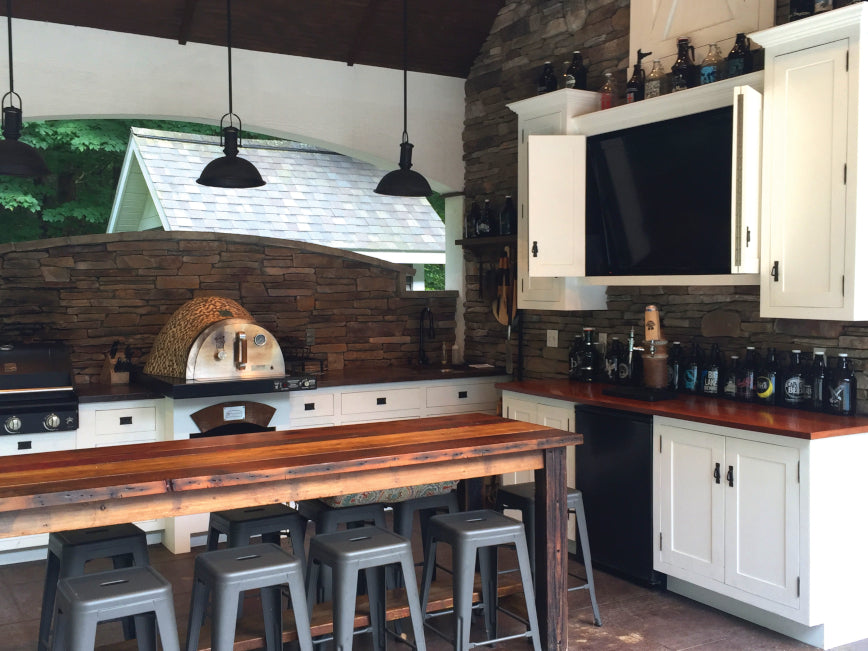
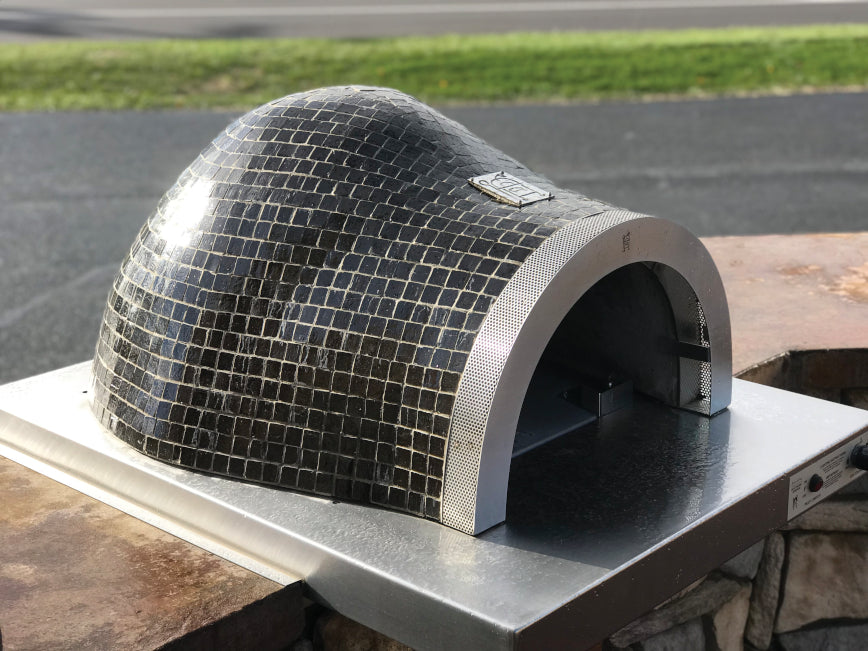
The HPC Fire Villa is the oven on the counter from the Forno de Pizza line: a refractory dome cast in one piece with two inch walls, set on a stainless hearth that drops into a cutout in your outdoor kitchen on a stainless flange, tiled by hand in recycled glass mosaic. It burns wood, it burns natural gas or propane, and it burns both at once, because the gas burner is how you light the wood. Every Villa is built in Miamisburg, Ohio by Hearth Products Controls, the company behind the HPC electronic ignition systems in fire pits across the country, and the same flame sensing ignition runs this oven. Crustify is an authorized dealer, and every HPC Fire Villa ships free by freight.
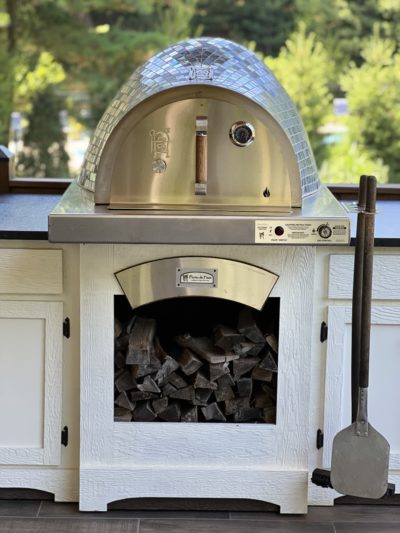
If you have been comparing built in pizza ovens, the Villa is the one that does not ask you to pour a masonry base or frame a chimney. The hearth and dome together weigh about 400 lb installed, which HPC calls the lightest authentic brick dual fuel oven on the market, and the whole install is three steps on a counter at least 34 inches deep: set the flange, set the hearth, set the oven. It vents through the front, so nothing rises above the dome. This page covers the install cutout and cabinet, how the oven is built, the fuel and ignition, the six tile colors, cooking and curing, how it compares to the Forno on a cart and the Di Napoli you clad yourself, and what to order with it.
HPC Fire Villa at a glance
Fuel: wood, natural gas or propane, or both together; gas burner lights the wood; electronic flame sensing ignition on two D cells or a 110V adaptor
Heat: hearth about 800°F at its hottest, dome top over 1,000°F, refractory rated past 2,400°F; about 30 minutes to pizza
Floor: the same cooking floor as the Forno, about 29 by 30 inches, about 870 square inches, 18 inch mouth
Build: one piece cast refractory dome with 2 inch walls on a 3 3/8 inch 304 stainless hearth; recycled glass mosaic tile in six colors, custom by request
Install: drops into a 33 1/2 to 33 3/4 inch wide by 32 inch deep cutout on a 34 inch minimum counter, 36 inch minimum cabinet below; about 400 lb installed; two to three people, licensed hearth installer
In the crate: tiled oven, stainless hearth, vent and stainless flange; door, cover and accessory kit sold separately
Ships free by freight from HPC in Las Vegas or Dayton, usually within a couple of business days; $95 residential liftgate; two year HPC warranty, residential use
Price shows on the color and gas type you select above. Questions answered in the FAQ tab or by chat, which goes straight to the owner.
The Cutout, the Counter and the Cabinet

Start with the counter, because the Villa is sized to it. HPC's spec drawing calls for a solid surface counter that takes heat, granite, concrete or ceramic tile, at least 34 inches deep front to back. The flyer rounds that to a 35 inch deep counter, and 35 is the number to plan around if you are still drawing the kitchen. The rough opening is 33 1/2 to 33 3/4 inches wide and 32 inches deep, cut so the front edge of the stainless flange sits flush with the front edge of the counter. The counter must carry about 400 lb across the cutout, so HPC wants solid support on each side within 1 1/2 inches of the opening, where the flange's locking tabs reach under the stone. On a concrete counter thicker than an inch, the installer cuts two slits with a diamond blade so those brackets have somewhere to go.
The oven never sits on top of a counter. The hearth is designed to breathe from underneath, so the cutout stays open below it. That is also why the cabinet matters. HPC's cabinet drawing calls for a 36 inch minimum cabinet width with a 34 inch notch and a half inch cutout where the hearth passes through, and the bottom of the hearth has to clear any combustible material by at least half an inch. The cabinet needs ventilation for the gas supply: on natural gas, a 3 by 18 inch vent in the back of the cabinet no more than 5 inches below the countertop; on propane, the same 3 by 18 inch vent at the back no more than 5 inches above the cabinet shelf. If the back of the cabinet sits against a wall that blocks that vent, the front of the cabinet cannot have doors, because the burner needs that air. Hearth to back wall: 2 inches to a combustible wall, zero to a non combustible one. And a propane cylinder cannot live inside this cabinet; it goes in a separate, adjacent, ventilated enclosure.
Above and around the dome, the manual's clearances are 24 inches from the front and sides of the oven to any combustible construction, and 36 inches from the top of the oven opening to a roof overhang or soffit attached to the building. If the oven is going under a covered structure, HPC wants a licensed HVAC professional to say whether a hood is needed, both for smoke and for keeping the ceiling clean. The installer should be a licensed hearth installer; HPC asks for that in the manual, and two to three people for the lift.
The install itself is the part that sells the Villa to contractors. Peel the protective film off the flange, set it where you want the oven and trace the cutout, cut the counter, drop the flange in flush, and lock it with the tabs and screws from underneath. Two people set the hearth onto the flange and tighten three thumb screws under it. Connect the gas to the bottom of the hearth, check it for leaks, and plug the 3V adaptor into a GFCI outlet or load the batteries. Then the oven: HPC has you slide it onto a 36 by 36 inch board, carry it to the hearth, rest the board on the burner side, slide the dome back to the gasket, lift the front and pull the board out. Set the vent in the mouth, and the oven is ready for its first firing. HPC's install video runs the whole sequence in a few minutes and is in the Installation tab below.
How the Villa Is Built

Most steel pizza ovens in this price range are a sheet metal box around a stone. The Villa is a brick oven. The dome is cast as one piece of refractory, the same class of material lining kilns and furnaces, with walls two inches thick; HPC rates the material past 2,400°F, and the one piece cast is what lets a brick oven leave the factory finished instead of being laid up course by course on your patio. The dome mouth is 18 inches wide and about 11 inches tall. Two inch walls are the point: they soak heat for the first half hour, then hold it, so the oven keeps its temperature between pizzas and for the bread, roasts and smoking that follow. HPC says the outside of the dome stays at about a third of the inside temperature, which is what lets a tiled oven sit in a kitchen counter.
The dome sits on a 3 3/8 inch thick hearth in a 304 stainless steel frame. The cooking floor is the same floor as the Forno cart oven, about 29 by 30 inches, roughly 870 square inches, enough for two pizzas side by side or a pan and a pizza at once. The gas burner lives under the floor on the left side of the hearth, per HPC's manual, with the control panel and ignition switch on the front face of the hearth where the counter meets the oven. Above the hearth the dome rises 19 3/8 inches, and the whole assembly, hearth and dome, is about 30 inches wide at the tile and 35 inches deep to the back of the hearth on HPC's drawing.
The vent is a stainless piece that drops into the mouth of the oven. HPC designed the Villa and Forno to exhaust through the front opening rather than a chimney, which keeps more heat in the dome and keeps the top of the oven clean. That is also why the cover, hood and overhang clearances in the section above exist: everything the oven exhausts comes out the front. The vent has to be in place before the oven is lit, and it is the piece that makes the door usable with the gas running.
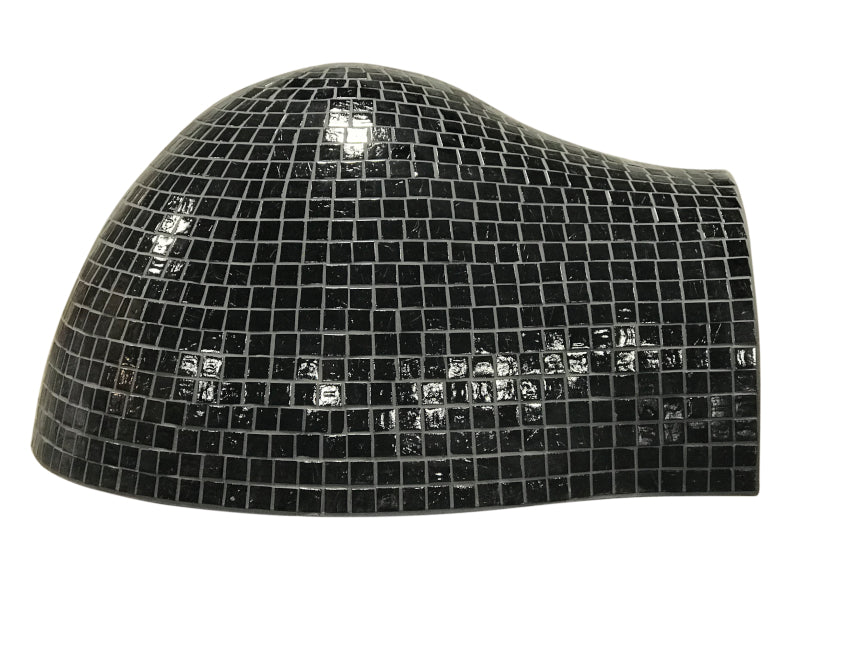
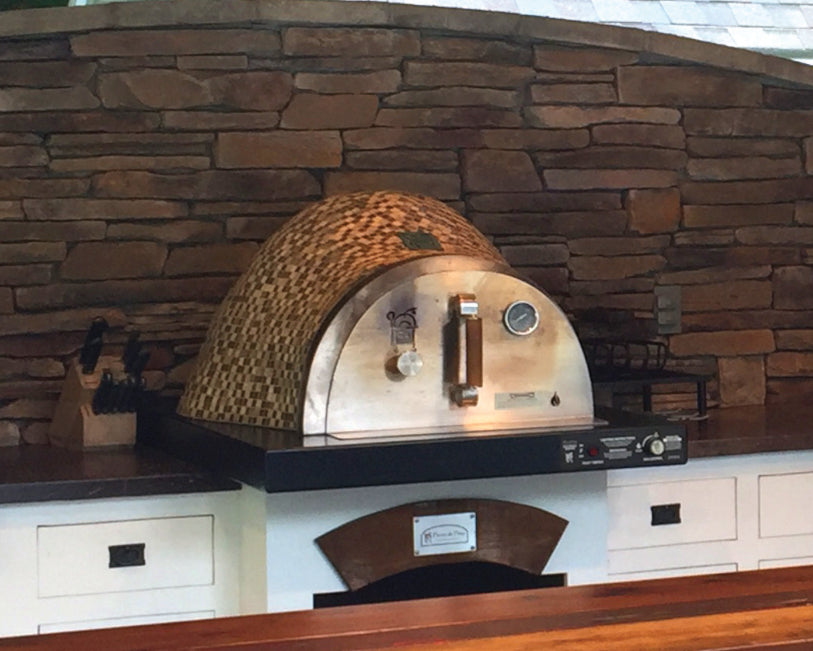
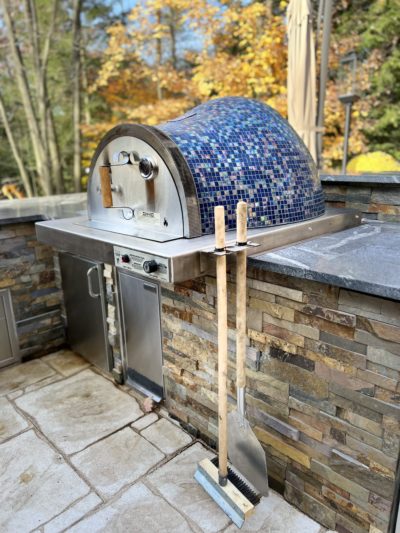
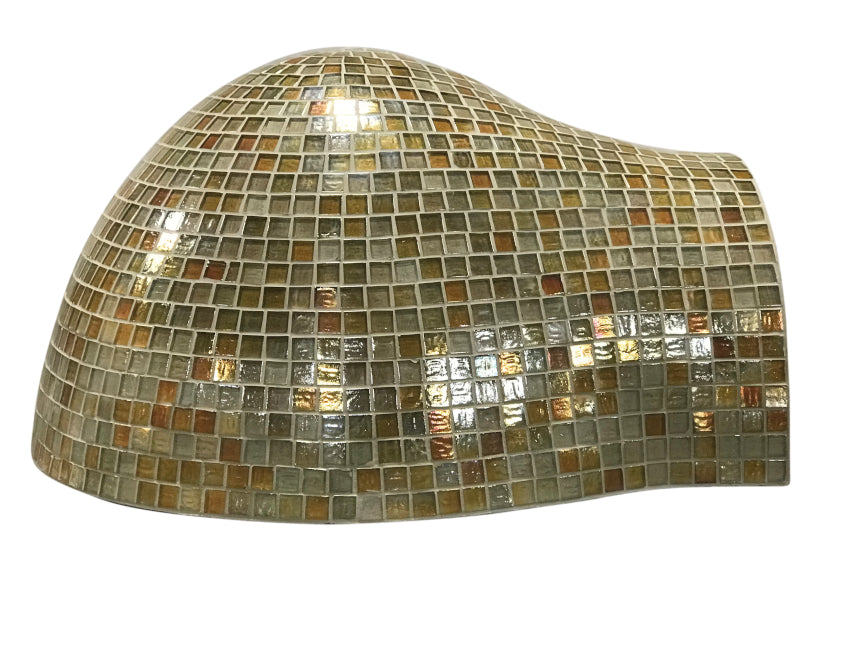
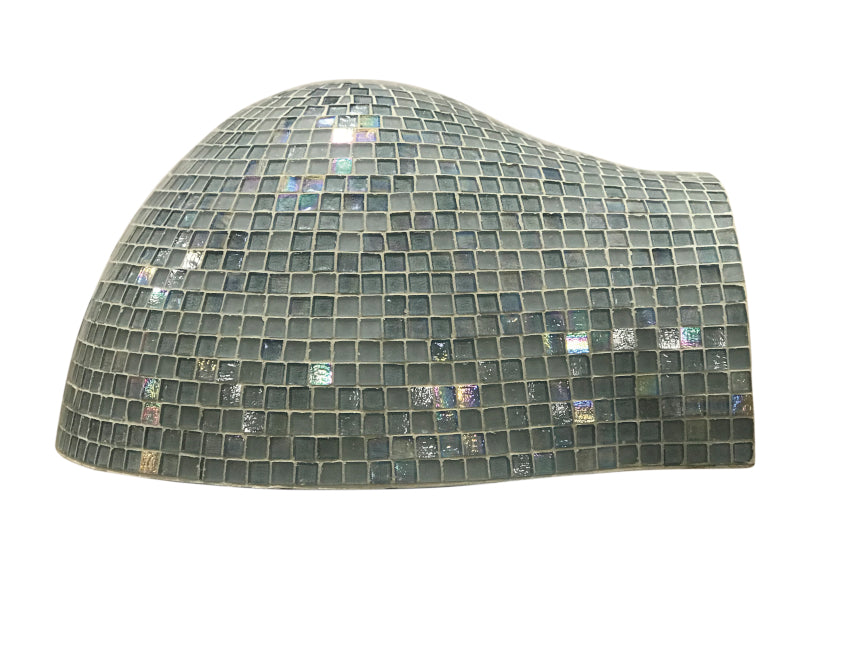
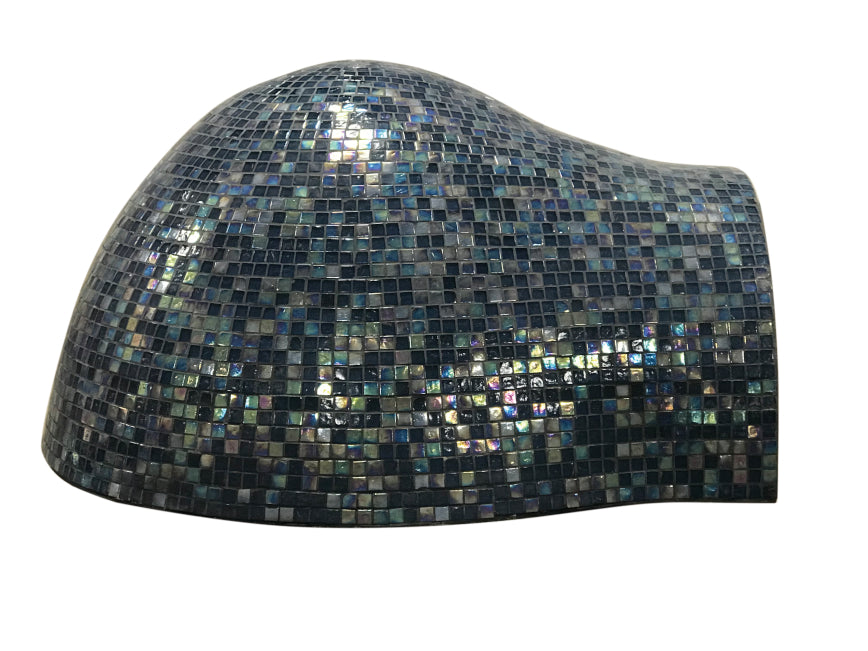
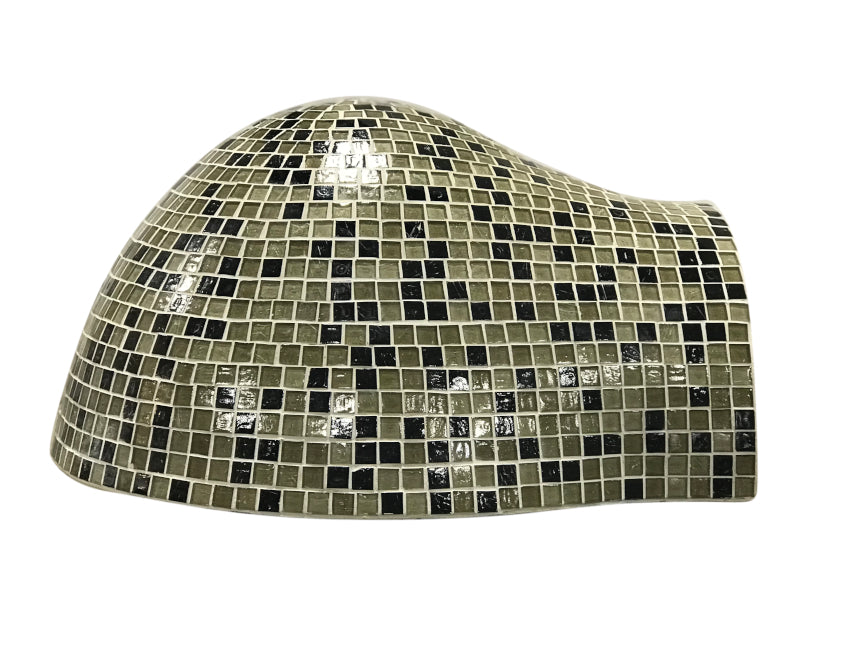
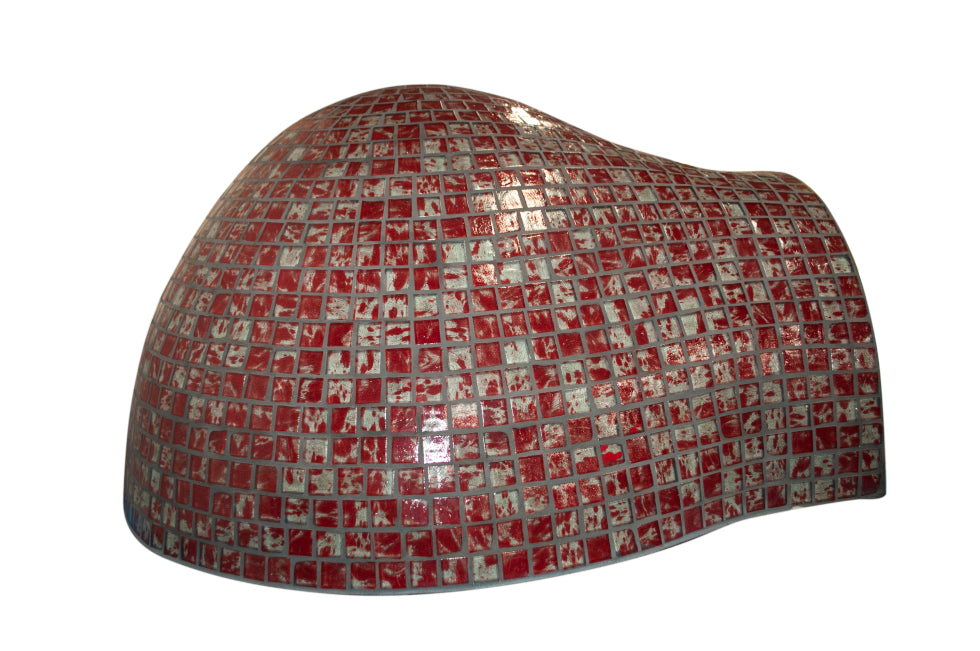
The tile is 100 percent recycled glass mosaic made in the USA, set by hand into a high temperature mortar on the dome. Every Villa is tiled individually, so no two are the same, and the glass takes the heat cycling that would crack a painted finish. HPC covers refractory cracks under an eighth of an inch as normal, with control joints cast into the dome; it is a brick oven and brick ovens craze.
Wood, Gas, or Both at Once

The Villa is a dual fuel oven in the plain sense: it has a gas burner and it burns wood, and HPC's manual has you use them together. Lighting it is a knob and a switch. Turn on the cylinder valve or the natural gas shutoff, set the oven control to off, switch the electronic igniter on, and wait up to a minute the first time for gas to reach the pilot. The flame sensing ignition confirms the pilot before the burner opens. Then turn the gas knob to set the flame, lay small pieces of dry hardwood on the burner, and the gas lights the wood. Once the wood has caught and made coals, push them to the center with the back of the brush to heat the floor, add more wood on top, and leave the gas on. HPC's reasoning is simple: the gas keeps the oven hot and the flame steady, and it burns off smoke from a dying or damp fire. On a weeknight you can skip the wood and cook on gas alone; on a weekend you can run the fire hard and shut the gas off; and when you want the gas on and a fire going for the smoke, that is how the manual tells you to run it.
Choose the gas type when you order. Natural gas needs fixed piping at 6 to 7 inches of water column and a licensed installer; propane runs on a 20 or 30 lb cylinder with a QCC1 fitting through the supplied regulator at 10 to 11 inches of water column, with the cylinder in its own ventilated enclosure next to the cabinet, never inside it. Any flex line between the supply and the oven must be rated to the oven's input and certified to ANSI Z21.75. If you change fuels later, HPC converts the oven through an HVAC or gas technician.
The ignition is 3 volts DC: two D cell batteries in the module, good for six months to a year in HPC's experience, or the 110V adaptor plugged into a GFCI outlet, which HPC wants on the left side of the oven base, 12 to 18 inches from the hearth. Either way there is no mains power in the oven itself. Batteries mean a Villa can live on a counter with no outlet within reach; the adaptor means never thinking about them.
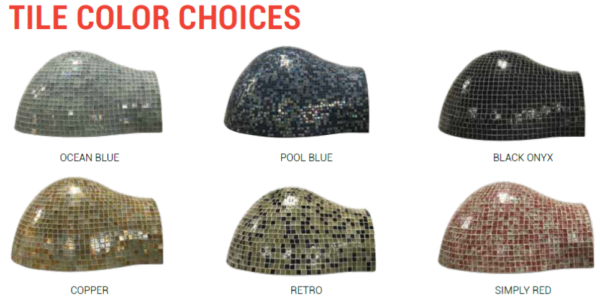
Six Mosaic Colors

Every Villa is the same oven under the tile. The color is the choice, and it is the first thing a guest sees on the counter, so pick it against the stone or stucco around it. Select the color and the gas type above; each combination is its own SKU in the pattern FDP-VILLA/BLX-EI-LP. A custom color in your own glass is available by request through HPC and American Glass Mosaics; contact us for lead time before you order it.
Black Onyx

Dark glass with the depth of wet slate. Reads as part of a dark granite or black stone counter and lets the flame do the talking. Model FDP-VILLA/BLX-EI.
Copper

Warm metallic amber that shifts with the light. The choice for a kitchen in travertine, tan stone or cedar, and the natural pairing when the counter is warm toned. Model FDP-VILLA/COPPER-EI.
Ocean Blue

Deep blue with green and violet in the glass, the color on HPC's own flyer cover. At home beside a pool or against gray stone. Model FDP-VILLA/OB-EI.
Pool Blue

Lighter and brighter than Ocean Blue, closer to the water it is named for. Model FDP-VILLA/PB-EI.
Retro

A mixed olive, gold and brown mosaic that reads like a mid century tile wall. Hides ash and fingerprints better than any of the others. Model FDP-VILLA/RETRO-EI.
Simply Red

Brick red glass with lighter flecks, the traditional pizza oven color in a finish that will not fade. Model FDP-VILLA/SR-EI.
Cooking in the Villa

Thirty minutes from a cold start is HPC's number for pizza, with the gas and wood running together. The floor is the gauge: at its hottest the hearth reads about 800°F, the top of the dome runs over 1,000°F, and the manual's old test still works, a pinch of flour on the hearth should scorch in a second or two. Brush the center of the floor clear, launch, and give the pizza a quarter turn every 30 seconds until the cheese and crust are where you want them, which at full heat is a Neapolitan pizza in about 90 seconds. An infrared thermometer takes the guessing out of it; HPC sells one and it is in the What to Order section.
Bread goes up front, where the floor runs 300 to 400°F while the back is at pizza heat. Roasts and vegetables go in a pan once the fire has settled. HPC's manual covers grilling in the oven with the grill rack: slide a disposable pan on the hearth to catch the drippings, set the rack over it with mitts, oil the rack, and sear over live coals; without a drip pan you can leave the embers on the floor and set the rack straight over them. Heat control is wood, gas, and the door: less wood and less gas for lower heat, and the door works as a damper, less air in, less fire.
Smoking is the last thing you do, not the first. When the cooking is done, let the fire die to coals, turn the gas off at the knob and at the cylinder or shutoff, add your smoking chips to the dying fire, and put the door on. The smoke circulates in the dome at low heat and the door thermometer tells you where you are. Two rules from the manual: the door never goes on with the gas running unless the vent is in place, and the gas is fully off before you smoke. For wood, HPC is specific: oak only, dried at least a year, debarked, 1 1/2 to 3 inches across and 12 to 14 inches long. Seasoned oak with no bark is what keeps the smoke down and the embers from popping onto your food.
Curing and the First Firing
A refractory dome holds water from casting, and the first fires drive it out as vapor. HPC's first firing is gas only, no door, and takes at least five hours: two hours with the burner at about half an inch of flame, one hour at an inch and a half, one hour at two and a half, then one more hour as the oven climbs with a little kindling added. Do not rush it; heating a new dome too fast is how cracks start. After that the oven is yours. In freezing weather, start every fire on gas before adding wood, for the same reason. Hairline cracks under an eighth of an inch are normal in any refractory oven and HPC casts control joints into the dome for them; anything larger, call HPC for repair instructions. The curing instructions are a separate PDF in the Installation tab.
How the Villa Compares
Four built in or counter mounted ovens on this site cover the same decision from different directions. The Villa is the one that drops into a finished counter in an afternoon.
| Oven | Fuel | Install | What sets it apart |
|---|---|---|---|
| Villa (this page) | Wood, NG or LP, or both | Drops into a 34 to 35 in deep counter on a stainless flange, about 400 lb | Finished tiled dome, front vent, no chimney, three step install; the lightest brick dual fuel oven for a counter |
| HPC Fire Forno | Wood, NG or LP, or both | Same dome and hearth on a black steel cart, about 450 lb, rolls into place | The Villa without the cutout; the choice when the kitchen is not built yet or the oven may move |
| HPC Fire Di Napoli | Wood, NG or LP, or both | Bare core with enclosure and 6 in chimney, 33 3/8 in front, you clad it | Same HPC dome inside a stone or stucco surround you design; a chimney instead of a front vent |
| Tuscan Chef GX-DL | Wood only | Sets on a masonry base or counter, lifting chains included | 46 in two chamber oven with the firebox under the floor; three 18 in pizzas, no gas |
| APO Hybrid Ready brick oven | Wood, plus a gas burner sold separately | Handmade Portuguese dome on a block base you build, about 1,300 lb | The traditional brick dome, pre drilled for a Vamparossa burner; a masonry project, not a drop in |
Villa (this page)
Fuel: wood, NG or LP, or both
Install: drops into a 34 to 35 in deep counter on a stainless flange, about 400 lb
Finished tiled dome, front vent, no chimney, three step install; the lightest brick dual fuel oven for a counter.
HPC Fire Forno
Fuel: wood, NG or LP, or both
Install: same dome and hearth on a black steel cart, about 450 lb
The Villa without the cutout; the choice when the kitchen is not built yet or the oven may move.
HPC Fire Di Napoli
Fuel: wood, NG or LP, or both
Install: bare core with enclosure and 6 in chimney, you clad it
Same HPC dome inside a surround you design; a chimney instead of a front vent.
Tuscan Chef GX-DL
Fuel: wood only
Install: sets on a masonry base or counter, lifting chains included
46 in two chamber oven with the firebox under the floor; three 18 in pizzas, no gas.
APO Hybrid Ready brick oven
Fuel: wood, plus a gas burner sold separately
Install: handmade Portuguese dome on a block base you build, about 1,300 lb
The traditional brick dome, pre drilled for a Vamparossa burner; a masonry project, not a drop in.
Between the two HPC ovens the question is only whether the counter exists. If it does, the Villa; if it does not, or if you want to try the oven on a patio first, the Forno is the same oven on wheels. The Di Napoli is for the buyer who wants the oven to disappear into a stone chimney stack of their own design. Every other built in on the site is in the Built In collection.
Who Should Buy the Villa, and Who Should Not

Buy the Villa if you are building or already have an outdoor kitchen with a solid counter at least 34 inches deep and a cabinet below it that can be vented, and you want a brick oven that cooks on wood, gas or both without a masonry base or a chimney. It is the oven for the homeowner who wants Friday pizza on gas and a Sunday roast on wood from the same counter, and for the mason or outdoor kitchen contractor who wants a finished, warrantied oven that drops in on a flange instead of a dome to clad. It is also the right answer when a propane cylinder can be housed next to the cabinet or natural gas is already run to the kitchen.
Do not buy the Villa if the oven has to move; that is the Forno. Do not buy it for a wood counter, a composite deck top or any counter that cannot take heat and 400 lb across a 33 inch cutout. Do not buy it for a cabinet that cannot be vented at the back or opened at the front, or if the only place for the propane cylinder is inside that cabinet. Do not buy it for indoor use or for a commercial kitchen: HPC rates the oven for outdoor use, and the two year warranty covers residential use only. And if you want a wood oven with no gas at all, the Tuscan Chef GX-DL is the built in on this site that does that.
What to Order With It
The Villa cover first. HPC's manual asks for an outdoor cover whenever the oven is not in use, to keep UV, rain and snow off the tile and the hearth, and FDP-COVER-VILLA is cut for the dome above the counter. The door with thermometer is what makes the Villa an oven and a smoker rather than only a pizza oven: it holds heat for bread and roasts, works as a damper, and carries the gauge the manual relies on for smoking. The HPC accessory kit puts the peel, brush, utensil holder, wooden paddle, pans and dough sheets on the same delivery. The infrared thermometer reads the floor so you launch when it is at temperature instead of guessing from the flour test. Accessories ordered with the oven ride on the same freight at no added charge.
Buying the Villa From Crustify
Crustify is an authorized HPC Fire dealer, so the full two year warranty applies. The Villa ships by freight from HPC's warehouses in Las Vegas, Nevada or Dayton, Ohio, usually within a couple of business days of your order, crated on a pallet and delivered curbside with a $95 residential liftgate fee at checkout; a business address with a dock pays no liftgate. Shipping is free in the contiguous 48 states; Alaska, Hawaii and Puerto Rico are quoted before you order. Inspect the crate before you sign and note any damage on the delivery receipt; concealed damage is reported within 48 hours. Returns are accepted within 14 days on an unused oven in its original packaging, with return freight paid by the buyer, so measure the counter and read the cabinet section before you order. Chat and email go straight to the owner and are usually answered the same day; if you are sizing a cutout or sorting out cabinet ventilation, send the drawing and we will check it against HPC's spec sheet before you cut.
KEY FEATURES
- HPC Fire Villa built in pizza oven: one piece cast refractory dome with 2 inch walls on a 3 3/8 inch 304 stainless hearth, tiled in recycled glass mosaic, made in Miamisburg, Ohio
- Dual fuel: wood, natural gas or propane, or both at once; the gas burner lights the wood and holds the oven steady
- Electronic flame sensing ignition on two D cells or a 110V adaptor, no mains power in the oven
- Hearth about 800°F at its hottest, dome top over 1,000°F, refractory rated past 2,400°F; about 30 minutes to pizza
- Same cooking floor as the Forno: about 29 by 30 inches, about 870 square inches, 18 inch mouth, two pizzas at once
- Front vent, no chimney; nothing rises above the dome in the finished kitchen
- Three step install: stainless flange, hearth, oven; about 30 minutes for two to three people once the counter is cut
- Cutout 33 1/2 to 33 3/4 inches wide by 32 inches deep on a 34 inch minimum deep solid surface counter (HPC's flyer plans for 35); about 400 lb installed
- Cabinet 36 inches minimum with a 34 inch notch and a 3 by 18 inch rear vent; propane cylinder housed outside the cabinet
- Six mosaic colors: Black Onyx, Copper, Ocean Blue, Pool Blue, Retro, Simply Red; custom color by request
- Choose color and gas type above; each pair is its own SKU, pattern FDP-VILLA/BLX-EI-LP
- In the crate: tiled oven, stainless hearth, vent, stainless flange; door, cover and accessory kit sold separately
- Two year HPC warranty, original purchaser, residential use; hairline cracks under 1/8 inch are normal
- Ships free by freight from Las Vegas or Dayton; $95 residential liftgate; 14 day returns unused in original packaging
SPECIFICATIONS
| Model | FDP-VILLA/[color]-EI-NG or -LP; colors BLX, COPPER, OB, PB, RETRO, SR; custom by request |
|---|---|
| Fuel | Wood, natural gas or propane, or both together; gas burner lights the wood |
| Ignition | Electronic, flame sensing, 3V DC: two D cell batteries or 110V adaptor into a GFCI outlet on the left side of the base, 12 to 18 in from the hearth |
| Gas supply | NG 6.0 to 7.0 in W.C., fixed piping; LP 10.0 to 11.0 in W.C., 20 or 30 lb cylinder with QCC1 fitting, supplied regulator; flex line rated to input and certified to ANSI Z21.75 |
| Dome | One piece cast refractory, 2 in walls, rated past 2,400°F; about 30 in wide at the tile, 19 3/8 in tall above the hearth |
| Mouth | 18 in wide, about 11 in tall; front vent, no chimney |
| Hearth | 3 3/8 in, 304 stainless steel frame; cooking floor about 29 by 30 in, about 870 sq in |
| Temperatures | Hearth about 800°F at hottest; dome top over 1,000°F; bread zone up front 300 to 400°F |
| Counter | Solid surface that takes heat (granite, concrete, ceramic tile), 34 in minimum deep per spec sheet, 35 in per flyer; rough opening 33 1/2 to 33 3/4 in wide by 32 in deep; flange front flush with counter edge; support within 1 1/2 in each side; oven never on top of the counter |
| Cabinet | 36 in minimum, 34 in notch, 1/2 in cutout; hearth bottom 1/2 in from combustibles; 3 by 18 in rear vent (NG within 5 in below countertop, LP within 5 in above shelf); no front doors if the rear vent is blocked; LP cylinder outside the cabinet |
| Clearances | 24 in from front and sides of oven to combustibles; 36 in from top of opening to overhang or soffit; hearth to back wall 2 in combustible, 0 in non combustible; HVAC professional for any hood under a cover |
| Weight | About 400 lb installed; crated shipping weight about 450 lb |
| Finish | Recycled glass mosaic tile, made in USA, hand set in high temperature mortar; six colors plus custom |
| Wood | Oak only, at least 1 year dried, debarked, 1 1/2 to 3 in diameter, 12 to 14 in long |
| First firing | Gas only, no door, at least 5 hours: 2 h at 1/2 in flame, 1 h at 1 1/2 in, 1 h at 2 1/2 in, 1 h more with kindling |
| In the crate | Tiled oven, stainless hearth, vent, stainless flange, LP regulator on LP models |
| Sold separately | Door with thermometer FDP-DOOR, Villa cover FDP-COVER-VILLA, accessory kit FDP-ACCESSORY-KIT, infrared thermometer FDP-INFRARED-GUN, grill rack FDP-GRILL RACK |
| Use | Outdoor only; residential warranty; never moved hot |
| Warranty | Two years from purchase, original purchaser, residential use; cracks under 1/8 in normal |
| Shipping | Free freight in the 48 states from Las Vegas NV or Dayton OH, usually within a couple of business days; $95 residential liftgate; AK, HI and PR quoted |
| Returns | 14 days, unused, original packaging, buyer pays return freight |
| Maker | Hearth Products Controls, 2225 Lyons Rd, Miamisburg, OH 45342, 877-585-9800 |
Documents: HPC Fire Villa spec sheet (PDF) and the HPC Fire Forno de Pizza flyer (PDF).
VIDEO
INSTALLATION GUIDE & USER MANUAL
Before the counter is cut. Confirm the counter is a solid surface that takes heat and is at least 34 inches deep (plan on 35), that the cabinet below is at least 36 inches wide with a 34 inch notch, that it can be vented at the back with a 3 by 18 inch opening in the right place for your gas type, and that there is support within 1 1/2 inches of the cutout on both sides. Decide where the propane cylinder enclosure or the natural gas stub goes, and where the GFCI outlet goes if you will use the adaptor. HPC asks for a licensed hearth installer and two to three people.
Flange. Remove the protective film, set the flange where the oven will sit, mark the cutout, cut the counter, lift the piece out, and set the flange in with its front edge flush to the counter edge. Insert the locking tabs under the counter through the flange holes and tighten; where a front support blocks a hole, use a Tapcon concrete screw. On concrete thicker than an inch, cut slits with a diamond blade for the brackets first.
Hearth. Two people set the hearth onto the flange. Tighten the three thumb screws under it, connect the gas line to the bottom of the hearth, and check for leaks. Plug the 3V adaptor into the module and the GFCI outlet, or load two D cells.
Oven. Set the dome on a 36 by 36 inch three quarter inch board and carry it to the hearth. Rest the board on the burner side, slide the oven back to the gasket, lift the front and pull the board out. Position the oven, then set the vent in the mouth; the vent must be in before the oven is lit. The install video below runs the sequence.
First firing. Gas only, no door, at least five hours on the schedule in the curing instructions. In freezing weather, start every fire on gas before adding wood.
Running it. Igniter on, pilot lights, set the flame, lay small dry oak on the burner, let the gas light it, push the coals to the center, add wood, leave the gas on. Door only with the vent in place or the gas off. Cover the oven when cold. HPC recommends an annual service by an NFI certified professional.
Documents: HPC Fire Villa user manual and installation guide (PDF), HPC Fire Villa curing instructions (PDF), HPC Fire Villa spec sheet (PDF).
WARRANTY INFORMATION
Term. HPC Fire Inspired warrants the Villa for two years from the original purchase against defects in material and workmanship, to the original retail purchaser, not transferable; keep the sales receipt. HPC repairs or replaces the defective component at its option, with new or remanufactured parts, or a product of equal or greater value if the model is no longer made.
Residential use. The two year warranty applies to the oven in residential use only.
Cracks. With the temperature swings of a wood and gas oven, cracks will form in the refractory and do not affect performance; HPC does not warrant a crack free oven and does not replace an oven for cracks. Cracks larger than one eighth of an inch from improper heating or handling are not covered; if one appears, contact HPC for repair instructions.
Exclusions. Normal wear, misuse, improper handling, wrong voltage, use contrary to the manual, disassembly or repair by anyone other than HPC or an authorized service center, improper use of gas, and acts of God. Modifying the oven voids its certification and the warranty.
Claims. Contact us first with photos and your order number and we handle the claim with HPC. Shipping damage is separate: note it on the delivery receipt or report concealed damage within 48 hours.
FREQUENTLY ASKED QUESTIONS - FAQ'S
Frequently Asked Questions (FAQs)
Your Questions Answered Before You Buy
These are the questions we get most often about the HPC Fire Villa, answered from HPC's manual, spec sheet and flyer. If yours is not here, chat or email goes to the owner and you will usually hear back the same day.